A 5-room house does not mean the same thing depending on whether you are looking at a real estate listing, your home insurance contract, or your tax notice. This confusion over the counting of rooms has direct consequences on price, taxation, and even coverage in case of a claim. Understanding what the classification “type 5” really entails allows for a better evaluation of a property, whether for purchase, construction, or renovation.
Three definitions of T5 depending on the context: listing, insurance, taxation
The term “5-room house” seems clear. It is not. The way rooms are counted varies depending on the interlocutor, and these discrepancies alter the perceived value of the property.
| Context | Counted rooms | Excluded rooms | Surface threshold |
|---|---|---|---|
| Real estate listing (SeLoger, Leboncoin) | Living room, bedrooms, office | Kitchen (often), bathrooms, hallways | No uniform threshold |
| Home insurance | Habitable living spaces (living room, bedrooms, office, playroom) | Kitchen, bathrooms, hallways, landings | Variable by insurer |
| Taxation (taxes) | Rooms of at least 9 m² of living space | Rooms smaller than 9 m² | Minimum 9 m², beyond 40 m² a room can count double |
A room of 40 m² can be counted as two for tax purposes, which transforms a fiscal T4 into a T5 without any walls having moved. Conversely, an 8 m² office disappears from the tax count while it appears on the listing.
To delve deeper into the definition of a type 5 house and its rooms, the distinction between these three frameworks remains the most reliable starting point before making any decision.
Typical distribution of rooms in a T5 house: surfaces and layout
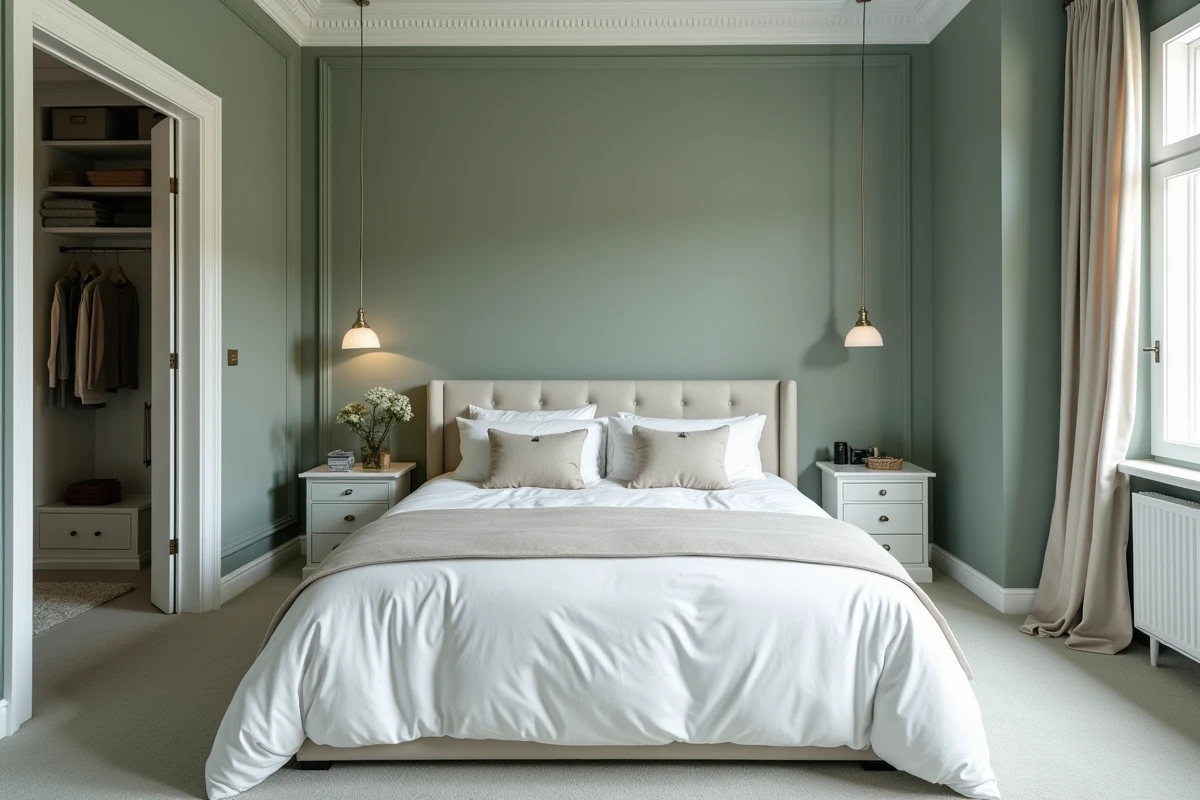
In the most common configuration, a 5-room house consists of a living room, three bedrooms, and an office (or fourth bedroom). The kitchen, bathrooms, and toilets are added without counting towards the main room tally.
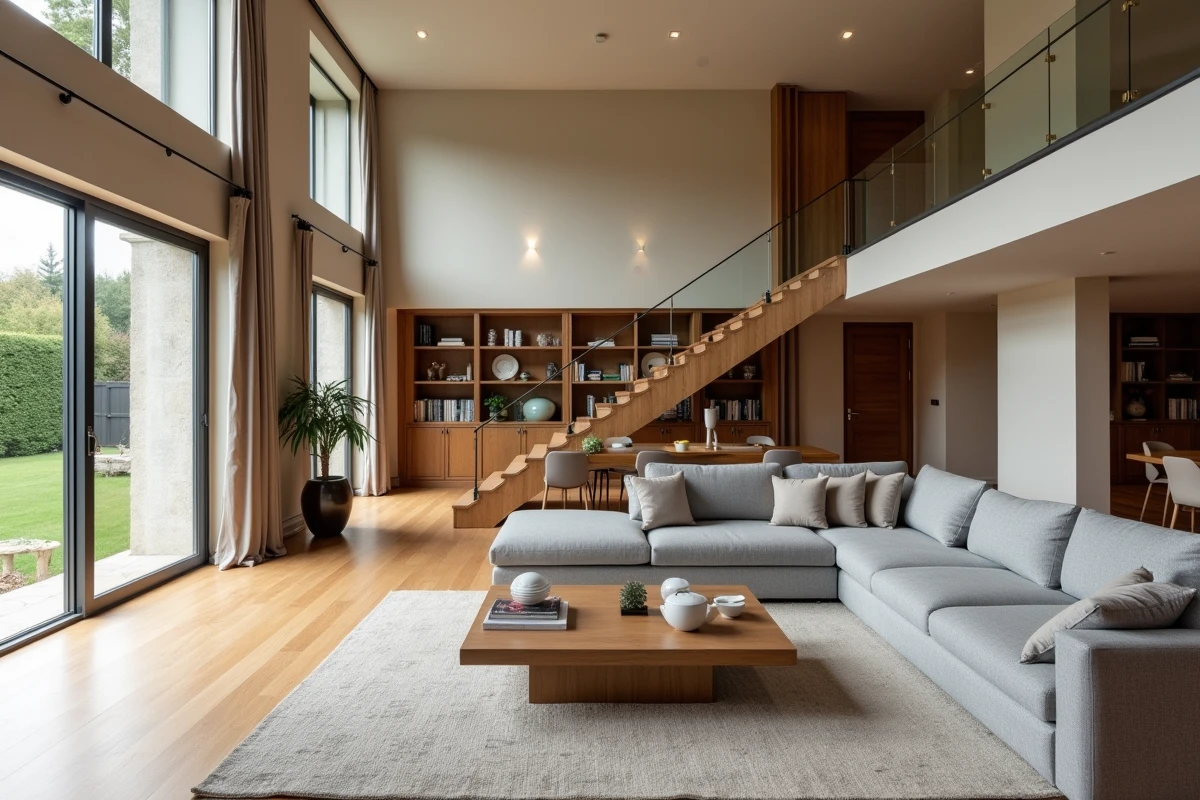
Living room and main living space
The living room serves as the pivot of the layout. In a T5 house intended for a family, this space often concentrates the largest living area of the home. The opening to the kitchen (open or semi-open) does not change the number of rooms but alters the perception of volume.
Bedrooms: three or four depending on use
The classic distribution provides for a more spacious master bedroom and two secondary bedrooms. When the fifth space serves as an office or guest room, its area is often smaller. For it to be recognized as a full room for tax purposes, it must reach the threshold of 9 m².
Wet rooms and technical spaces
Bathrooms, shower rooms, toilets, and laundry rooms never count as main rooms. Their sizing affects daily comfort without altering the classification of the property.
- A functional bathroom for four to five occupants requires sufficient space to include a bathtub or shower, double sink, and storage
- Separate toilets on each level prevent congestion during peak hours in a large family
- A pantry or laundry room, even modest, frees up space in the kitchen and bedrooms
Living area of a T5: what the law requires and what comfort demands
Regulations set a minimum standard, not an ideal. The decree of January 30, 2002, mandates that a decent dwelling must have at least one main room of 9 m² minimum with a ceiling height of 2.20 m, or a living volume of at least 20 m³. This threshold applies room by room.
However, the actual comfort of a 5-room house depends on the coherence between the total area and the distribution of spaces. A large house poorly distributed (long hallways, oversized landings) offers less comfort than a more compact dwelling with optimized circulation.
- Circulation spaces (hallways, landings, stairs) often represent a significant portion of the total area and are not habitable rooms
- The Carrez law only considers areas where the ceiling height exceeds 1.80 m, which reduces the declared area in converted attics
- A garage or unheated veranda does not count towards the living area or the number of rooms
Renovation and remodeling of a 5-room house: factors that change the count
Some renovation works modify the number of declared rooms, with repercussions on home insurance and taxation. Knocking down a wall between two bedrooms removes one room from the count. Converting an attic creates one, provided the surface and height thresholds are respected.
Interior insulation slightly reduces the living area of each room. In a dwelling close to regulatory thresholds, this gain in thermal comfort can bring a room below the 9 m² mark and alter its tax classification.
Attic or basement conversion
Transforming an attic into a bedroom or office is the most common lever to move from a T4 to a T5 without extension. The ceiling height remains the main constraint: below 1.80 m (Carrez law) or below 2.20 m (decent housing decree), the area does not count or only partially counts.
A semi-buried basement with sufficient natural light can also be requalified, but local urban planning regulations (PLU) strictly govern this type of transformation.
Moving from a T4 to a T5 through interior remodeling remains the least expensive solution to gain a room. Before undertaking any work, checking the current tax and insurance count of the property avoids creating a room that only exists on the architectural plan, without administrative recognition.