
Some liquid dishes take on a strange turn once reheated after being frozen. Soup lovers know this well: starches and dairy products do not always appreciate prolonged storage, and even the most carefully crafted recipe can end up surprising, sometimes reluctantly.
Fortunately, there are concrete solutions to keep the original consistency of your soup intact. A few precise actions, at the right moment, transform the tasting experience and avoid disappointments when reheating your preparation.
Why soup changes texture after freezing
Why does soup become grainy? This question often arises in kitchens where soups and veloutés are simmering. As soon as the soup heads to the freezer, its internal structure changes: the water from the vegetables and broth freezes into ice crystals. Upon thawing, these crystals melt, disrupting the balance and leaving a texture that crumbles, where smoothness gives way to a sometimes floury, often grainy appearance.
The amount of water added during preparation has a say in the future of your soup:
- An excess of water weakens the cohesion of the plant fibers, which promotes the separation of elements after freezing.
- A dense base of vegetables like squash, pumpkin, or sweet potato, on the other hand, offers a more consistent texture and a more stable result after being frozen.
Blending also plays an important role: a too-powerful device pulverizes finely, but if you insist too much, you end up breaking the natural emulsion. As a result, the soup may dissociate more upon thawing, a contradiction for a velouté.
The treatment of the broth affects the final density:
- Before blending, removing some of the liquid and then gradually reintegrating it allows for precise texture adjustment.
- This technique, often mentioned by professionals, gives control over consistency without sacrificing flavor.
Note: each vegetable binds water differently. Carrots, celery, or sweet potatoes fare better than zucchini or leeks, which are more watery. To better understand why soup becomes grainy, just observe these little tips that make a difference and choose your ingredients wisely to master preservation.
What mistakes to avoid to preserve the creaminess of your homemade soups
From the cooking stage, the choices made influence the texture you will find after thawing. Here are some pitfalls to avoid:
- An excess of water dilutes the soup and harms its structure, but too little concentrates flavors at the expense of creaminess.
- Remember to remove some broth before blending, then adjust to the ideal consistency by gradually reintegrating the liquid.
This dosage, recommended by many cooks, helps maintain the right balance between density and taste.
Among the natural allies of texture, the potato holds a prominent place. Its starch gives body to the soup. Other solutions exist:
- Stale bread, chickpeas, or lentils also serve as natural thickeners, without resorting to industrial powders.
- For a creamier touch, adding fresh cream, mascarpone, or cream cheese particularly enhances soups based on root vegetables.
Blending and cooking also require some vigilance. An ill-suited blender or hasty cooking sometimes leaves fibrous chunks, a floury sensation, or a dissociated liquid. Blend in short bursts and monitor the cooking to keep vegetables tender, without excess. Overcooking ruins flavor and results in a bland soup.
If the soup seems too thick, prefer a gradual addition of broth, milk, or even the cooking water of the vegetables, rather than a simple dilution with water. This is how the balance between taste and density is built, step by step.
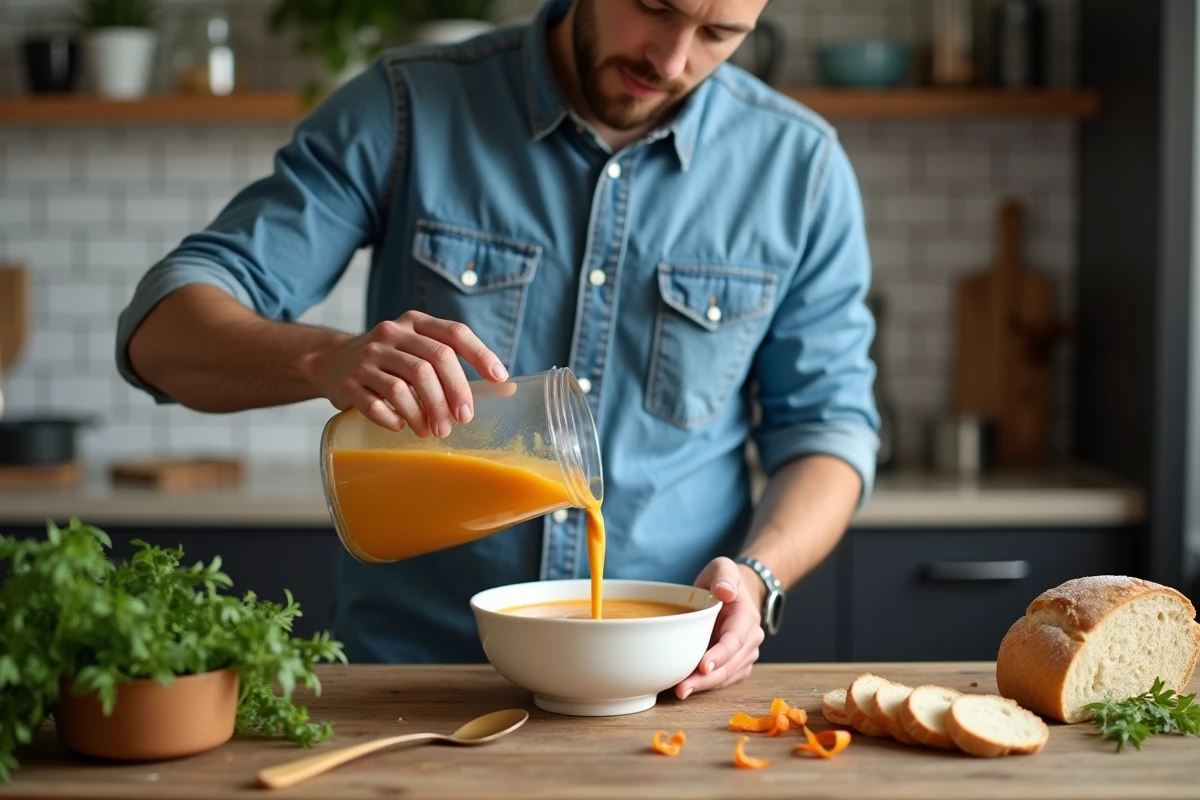
Practical tips for a tasty and creamy soup after thawing
Seeing your favorite velouté lose all creaminess after freezing can be disappointing. But it’s not just about the initial cooking: the way you thaw really matters. Let the soup gently regain temperature in the refrigerator, then reheat it over low heat. This double time limits the separation of liquids and fibers. Once hot, mix thoroughly to regain a uniform texture. If the soup remains lumpy, a quick blend will make it smoother.
Also, think about adjusting the texture and flavor at the last moment. If the soup has thickened, add a bit of broth, hot water, or plant-based milk. Too liquid? A spoonful of mashed potatoes, some cooked red lentils, or a splash of plant cream will work wonders. Coconut milk, for example, adds roundness and originality to a sweet potato and red lentil velouté.
To enhance the tasting experience, garnish your soup with various toppings. Here are some ideas to enrich your bowl:
- Re-blend the soup after reheating for a smooth texture.
- Adjust the density with liquid or a vegetable puree, depending on the desired consistency.
- Serve with crunchy or aromatic toppings: croutons, toasted seeds, fresh herbs, cheese shavings, or bits of dried fruit.
Restoring a homemade soup to its ideal texture is about playing with ingredients, time, and the right actions. And if, at the next tasting, the velouté lives up to all its promises, then the bet is successful. Nothing beats a perfectly smooth, comforting bowl to savor without hesitation.