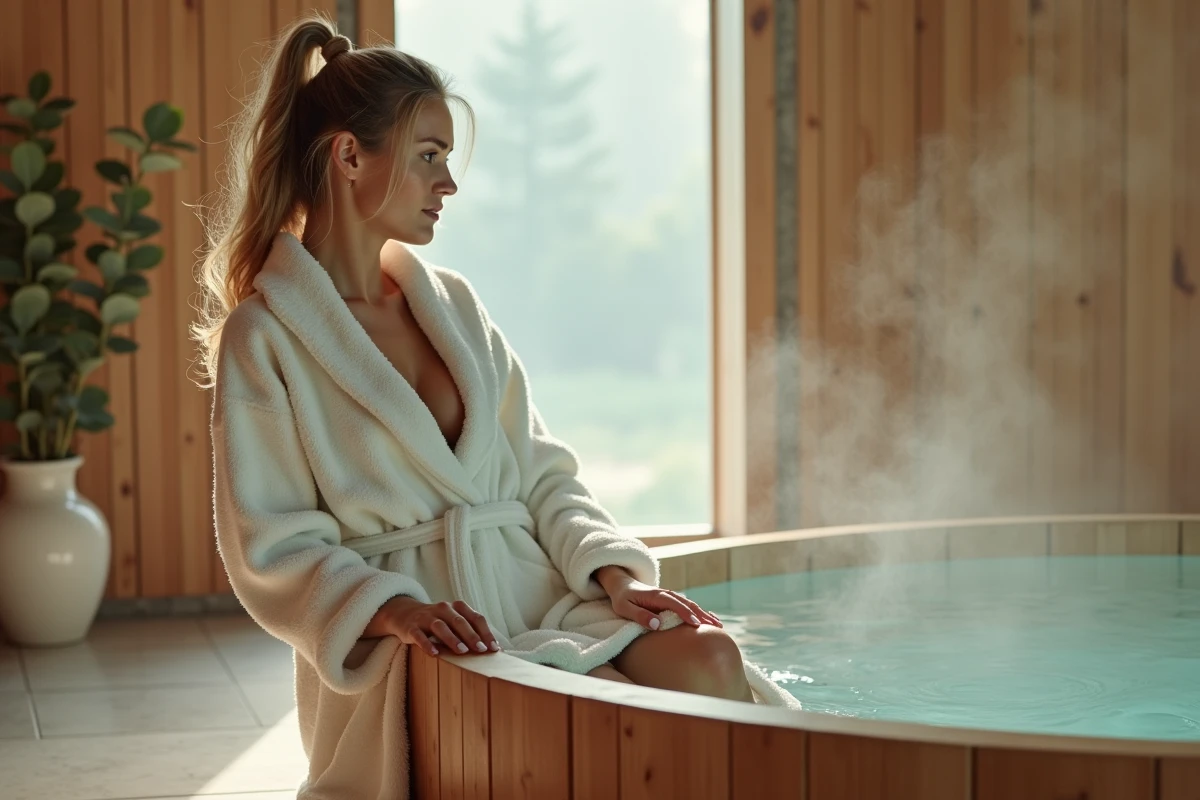
The order in which treatments are performed during a spa session directly affects the body’s response to heat, cold, and mechanical manipulations. Most guides suggest a single sequence (hammam, sauna, massage), without considering the time of day or the physiological state of the visitor. Comparing these sequences based on measurable parameters (body temperature, skin receptivity, muscle tension) allows for the selection of a suitable sequence rather than a generic protocol.
Spa Treatment Sequence According to the Time of Day
The body reacts differently to heat depending on whether it is in a state of wakefulness or a state of slowing down. Core body temperature follows a circadian cycle: it reaches its low point at the end of the night and its peak in the late afternoon. This variation influences tolerance to the humid heat of the hammam as well as the dry heat of the sauna.
| Time Slot | Body Temperature | Recommended Opening Treatment | Recommended Closing Treatment |
|---|---|---|---|
| Morning (8 AM – 11 AM) | Ascending phase | Hammam (humid heat, gradual increase) | Body scrub |
| Early Afternoon (1 PM – 3 PM) | Intermediate plateau | Warm bath or jacuzzi (moderate jets) | Relaxing massage |
| Late Afternoon (4 PM – 6 PM) | Close to peak | Sauna (intense dry heat) | Cold immersion followed by rest |
| Evening (7 PM – 9 PM) | Descending phase | Warm bath | Wrap or facial treatment |
In the morning, the body’s natural thermal rise is still in progress. Starting with a hammam complements this curve without forcing the organism. In contrast, in the evening, internal temperature begins to decline, and an overly intense sauna can delay sleep onset by pushing back this natural cooling.
To delve deeper into the logic behind each step and adjust your journey, you can read on Pop Your Beauty a complementary guide on the subject.
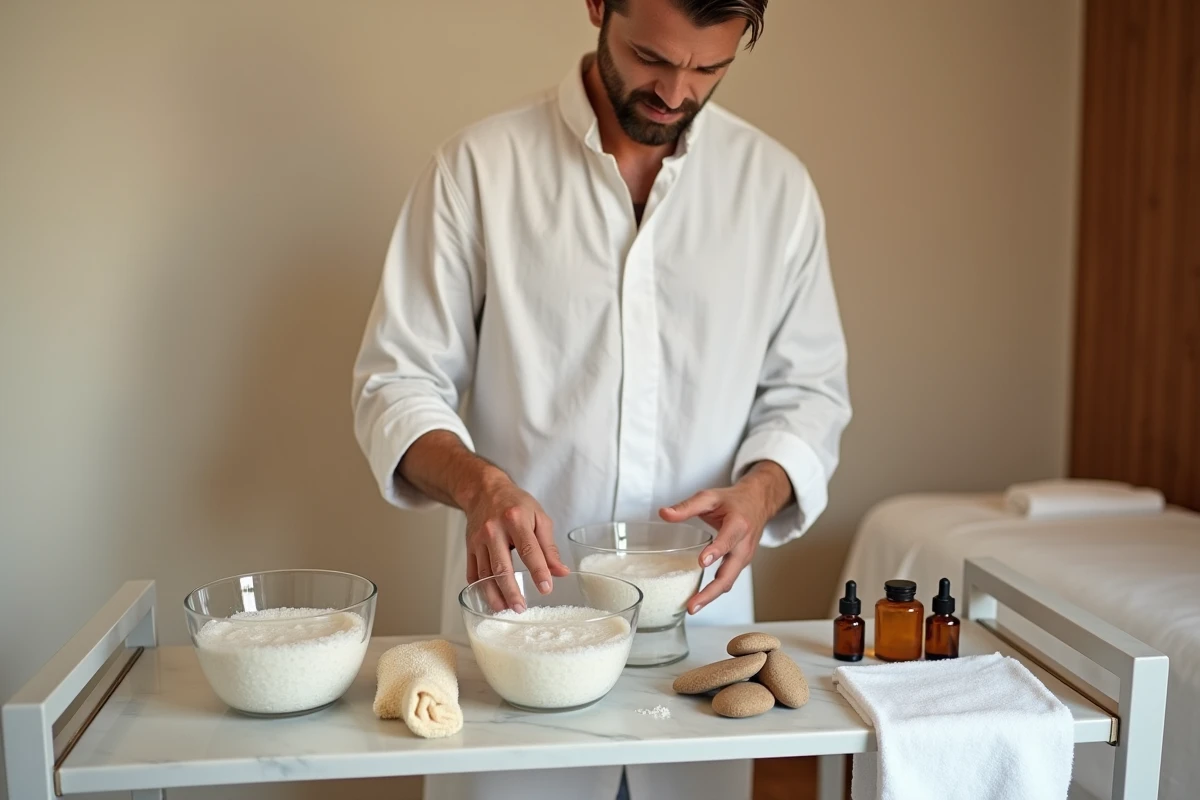
Hot-Cold Alternation at the Spa: What Physiology Requires
The principle of thermal alternation is based on vasodilation (heat) followed by vasoconstriction (cold). This mechanism stimulates blood circulation and induces a feeling of well-being related to the release of endorphins. The classic sequence can be summarized as heat, then cold, then rest, repeated two to three times.
Why Rest Between Cycles Changes Everything
Eliminating the rest phase between two alternations reduces the effect of vascular recovery. The body needs a few minutes in a lying or seated position, at room temperature, for the heart rate to stabilize. Without this time, the next cold exposure stresses a cardiovascular system still adapting.
The typical sequence works as follows:
- Hot phase (sauna or hammam) for a duration suited to individual tolerance, without exceeding the discomfort threshold
- Cold phase (cold shower, cold pool, or misting) brief, lasting from a few seconds to a minute
- Rest phase in a calm environment, lying down if possible, for several minutes before starting a new cycle
The rest period accounts for at least one third of the total circuit time. Shortening this phase is the most common mistake among rushed visitors.
Skin Treatments and Massage: Where to Place Them in the Spa Order
Scrubs and skin treatments benefit from being positioned after the first heat phase. Steam or dry heat softens the stratum corneum, making exfoliation more effective and less aggressive. Applying a scrub on unprepared skin requires more friction for a lesser result.
Massage After the Thermal Circuit, Not Before
Massage comes at the end of the journey, once the hot-cold cycles are completed. Muscles relaxed by heat and improved circulation respond better to mechanical pressure. Placing the massage before the thermal circuit exposes the body to residual muscle tension that limits the practitioner’s work.
A massage performed after two to three thermal cycles produces deeper muscle relaxation than a massage done cold. Tissue receptivity is directly related to their temperature and hydration level.
For facial treatments, the optimal timing is after the last rest cycle. The skin on the face, being thinner, benefits from the pore opening caused by heat but should not undergo further thermal exposure after the application of serums or masks.
Adapting the Spa Treatment Order to One’s Own Biological Rhythm
Standard guides propose the same sequence for all visitors. This approach overlooks that tolerance to heat varies according to individual chronotype. A person whose energy peak occurs in the morning does not derive the same benefit from a sauna at 6 PM as someone who is naturally active in the evening.
Some concrete indicators for adjusting the sequence:
- If heat quickly causes a feeling of heaviness, start with the jacuzzi (moderate heat with mechanical action from the jets) rather than the sauna
- If the goal is relaxation before sleep, end with a warm bath and a wrap, avoiding any intense cold phase in the last hour
- If the goal is muscle recovery after physical exertion, favor close hot-cold alternation with more pronounced cold phases
The opening treatment should correspond to the body’s state at that moment, not to a fixed protocol. A body already warmed by physical activity does not need a long heating phase. A body cooled by a sedentary day requires a gradual entry into heat.
The post-treatment phase is as important as the order of steps. Maintaining regular hydration throughout the journey and extending the final rest phase beyond the last treatment allows the nervous system to consolidate the shift to a parasympathetic state. Leaving the spa immediately after a massage or warm bath interrupts this transition and reduces the duration of perceived benefits.