
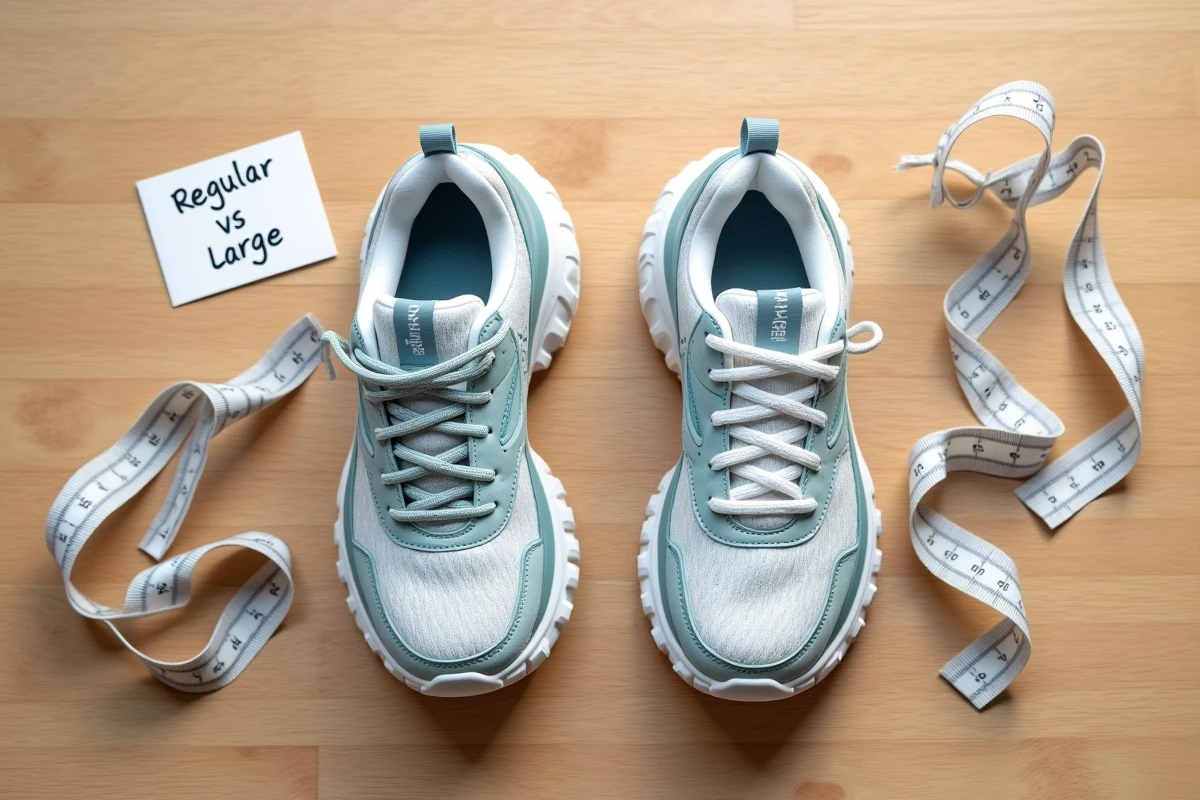
Choosing between a regular version and a wide version of a Hoka shoe does not mean selecting a different size. The width of the shoe affects the distribution of ground contact, foot stability within the sole, and tolerance for long efforts. Understanding what distinguishes these two options helps avoid mistakes that result in blisters, black toenails, or metatarsal pain after a few dozen kilometers.
Hoka wide and biomechanics of the stride: what width really changes
A Hoka wide model is not just a stretched regular model. The construction differs at the forefoot: the upper widens, the internal volume increases, and the midsole retains the same cushioning geometry. The foot therefore has more lateral space without changing the drop or stack height.
This difference has a direct effect on the propulsion phase. On a wide foot compressed in a regular version, the metatarsals slightly overlap, which reduces the contact surface at takeoff. The energy transfer becomes less efficient. With a wide fit, the toes naturally spread with each stride, improving stability without relying on a rigid reinforcement.
Runners with wide feet report a significant reduction in blisters and irritations after a month of transitioning to Hoka wide models, particularly on the Bondi, according to a field study published by the Journal of Foot and Ankle Research in March 2025. To delve deeper into the issue Hoka wide or regular foot width, one must go beyond simple measurements in centimeters and observe the behavior of the foot under load.

Comparison table: regular vs. wide on current Hoka models
Not all Hoka models are available in a wide version. Since 2024, the brand has expanded this option to more references, including in trail running with the Speedgoat 6. Here is a comparison of the characteristics that change (and those that do not) between the two versions.
| Criteria | Regular version | Wide version |
|---|---|---|
| Forefoot width | Standard (D men, B women) | Wider (2E men, D women) |
| Drop | Identical by model | Identical by model |
| Stack height (cushioning) | Unchanged | Unchanged |
| Outsole | Same compound | Same compound |
| Upper | Fitted cut | Wider side panel, adapted mesh |
| Model availability | All models | Bondi, Clifton, Speedgoat, Arahi (list expanding) |
The drop and cushioning remain strictly identical between regular and wide. Only the internal volume of the shoe varies. A runner who hesitates between the two versions does not sacrifice any technical characteristics related to cushioning or responsiveness of the sole.
Measuring foot width: a reliable method before purchase
Shoe size is not enough. Two feet of the same length can have several millimeters of difference in width at the metatarsals. To determine if the wide version is relevant, an accurate measurement is necessary.
- Place the foot flat on a sheet of paper, bearing weight (standing), at the end of the day when the foot is slightly swollen. Trace the outline with a vertically held pencil.
- Measure the distance between the inner edge of the big toe and the outer edge of the fifth metatarsal. This is the functional width of the foot.
- Compare this measurement to Hoka’s width indications: beyond the standard width D (men) or B (women), the wide version becomes recommended.
- Repeat the measurement on both feet, as asymmetry of a few millimeters is common. Always choose the width suited to the widest foot.
The ISO 9407:2023 standard has also tightened the measurement criteria for the width of insoles for running shoes. This framework encourages brands like Hoka to refine the correspondence between their sizes and the actual morphology of feet.
Hoka wide models and terrain: road, trail, marathon
The choice between regular and wide does not depend solely on morphology. The type of activity also plays a role.
On the road, the Bondi and Clifton models in wide version are suitable for runners who engage in long outings. The extra space at the forefoot limits the swelling felt after an hour of running. For the marathon, a fit that is too tight in the last kilometers deteriorates the stride and increases the risk of toenail injuries.
In trail running, the Speedgoat 6 wide meets a long-ignored need. On uneven terrain, the foot moves more inside the shoe. A wide model then offers increased flexibility without compromising lateral support, provided the lacing is tightened properly at the midfoot.
Hoka wide vs. Altra: what alternative for wide feet
Runners with wide feet often compare Hoka wide and Altra, whose so-called “FootShape” design is naturally flared. The main difference lies in the philosophy of the sole: Altra offers a zero drop, while Hoka maintains a variable drop depending on the models.
For pronators, Hoka wide provides superior stability thanks to the geometry of the midsole. A test from the Runner’s World Test Lab Report in January 2026 notes a significant increase in satisfaction among heavier runners who switched to Hoka wide.
Concrete signs that a regular model does not suit your foot
Several indicators can help you decide without hesitation:
- Persistent red marks on the sides of the toes after a run of less than 45 minutes.
- A recurring black toenail on the big toe or second toe, even with the correct length size.
- A sensation of lateral compression from the first kilometers, which intensifies with distance.
These symptoms do not resolve by simply taking a half size up. Increasing the length without adjusting the width creates excess volume at the heel, leading to slipping and friction at the back of the foot. The wide version addresses the problem at its source.
The choice between regular and wide comes down to a measurable factor: the width of the forefoot under load. Any decision based on the feeling in-store, with the foot at rest, risks underestimating the actual need. Measure, compare to the manufacturer’s indications, and test under running conditions.