On the ground, a solidarity trip often begins with a logistical constraint that no one anticipates: finding a local partner who genuinely participates in the decisions, and not just a service provider executing a program designed from France. It is this distinction, between subcontracting and co-construction, that separates solidarity tourism from its marketing version. An association that commits to this point changes the very nature of the stay offered to its members.
ATR Evaluation Grid: five criteria to filter solidarity travel offers
When receiving three proposals for solidarity stays for a group, the temptation is to compare prices and itineraries. The problem is that two offers at the same price can mask very different realities in terms of local impacts.
A guide published by the ATR association in 2026, developed from a survey conducted among 148 organizations between June and December 2025, proposes a grid with five entries: environmental impact, human impact, carbon footprint, responsible communication, inclusivity and accessibility. We are no longer in the realm of good intentions; we are in the realm of auditing.
The interest of this grid for a solidarity association is that it allows for precise questions to be asked before signing. Does the provider measure its emissions per traveler? Are host families paid directly or through an intermediary? Is the stay accessible to a person with reduced mobility? If the answer remains vague, that is a signal.
This approach can also be cross-referenced with regional resources. For example, documented local initiatives on the Alsace Unpacked website show that a nearby territory can also serve as a framework for a solidarity trip, without crossing an ocean.
Fair tourism and local governance: what an association checks before committing
The word “fair” is used everywhere, including by operators who simply donate a percentage of the trip price to a local NGO. The ATES reminds us in 2026 that fair tourism examines power relations, remuneration, and governance, not just financial redistribution.
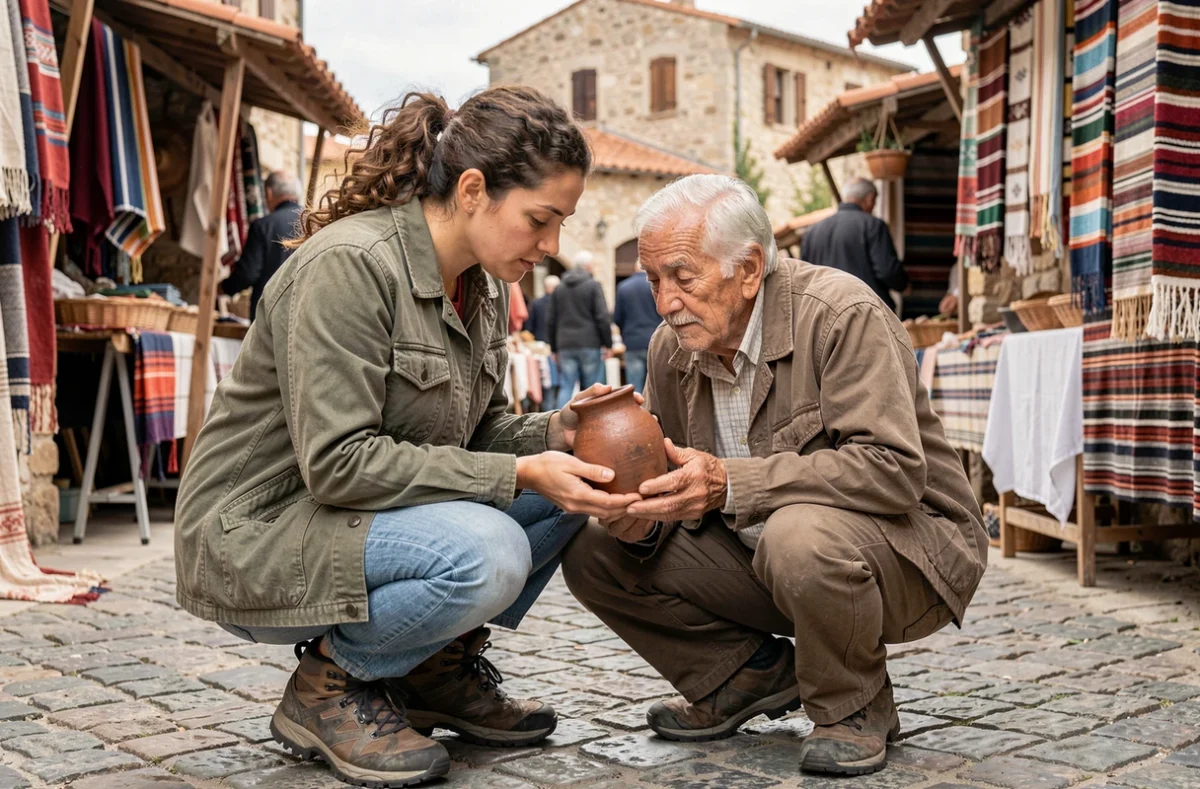
In practical terms, this means checking whether local partners participate in the design of the program. Do they co-decide on the places visited, the activities proposed, the schedule? Do they have a veto right over certain practices deemed intrusive by the community?
A solidarity association organizing a stay in Senegal or Peru should be able to answer these questions in writing, not just with a statement of intent on a webpage. The difference between a solidarity trip and a classic circuit labeled “responsible” often lies in this level of transparency.
Concrete case: co-decision on the ground
When a village decides that it will not host a group during the harvest season, and the association respects this decision without trying to negotiate an exception, we are in the realm of fair tourism. The local partner has the power to say no, and this refusal is integrated into the normal functioning of the project.
This mechanism seems simple on paper. In practice, it requires that the association absorbs the cost of a postponement or program modification without passing it on to the traveler as a penalty. It is a financial as well as an ethical commitment.
Accessibility of solidarity travel: a criterion that competitors ignore
Most content on solidarity tourism talks about encounters, sharing, and redistribution. Accessibility, however, remains on the sidelines. The ATR guide identifies it as one of the five evaluation pillars, making it a structuring subject and not an optional addition.
Accessibility covers three distinct dimensions:
- Physical accessibility: is the stay feasible for a person in a wheelchair, an elderly person, or a traveler with a chronic condition? Are accommodations, local transport, and activities suitable or adaptable?
- Financial accessibility: a solidarity association that offers only stays over 2,000 euros effectively excludes part of its members. Adapting the economic model of travel to the income level of participants is part of the solidarity commitment.
- Cognitive and linguistic accessibility: is the pre-departure information understandable for someone who does not master the jargon of responsible tourism? Is the language barrier on-site anticipated with trained local guides?
An association that integrates these three dimensions into its specifications does not offer the same product as one that settles for an environmental label.

Local solidarity projects: traveling differently without long-haul flights
Solidarity travel is often associated with West Africa, Latin America, or Southeast Asia. This view forgets that solidarity projects exist in France and neighboring countries, with a radically lower carbon footprint.
A group stay at a cooperative farm in Ardèche, a participatory heritage restoration project in Brittany, or an immersion in a subsistence agriculture project in Alsace fall under the same framework: meeting with a local community and making a concrete contribution to a collective project.
Geographical proximity presents an operational advantage for an association: field scouting is less expensive, local partners are easier to audit, and members who hesitate to travel far can test the format over a weekend before committing to a two-week stay abroad.
Carbon footprint and associative coherence
A flight from Paris to Dakar generates a quantity of CO2 per passenger that can strain the environmental discourse of an association. Proximity projects do not eliminate this dilemma for distant destinations, but they offer a credible alternative for part of the annual program.
The ATES and ATR also recommend integrating the carbon question from the design phase of the trip, not as a corrective measure afterward through forest compensation.
Preparing a solidarity trip in an association: the real friction points
On the ground, difficulties do not come from where one expects them. Financial arrangements are rarely the main problem. What gets stuck is the management of travelers’ expectations and coordination with local partners.
- Members’ expectations diverge: some want adventure, others comfort, and still others a strong humanitarian dimension. Clarifying the framework of the stay before registration avoids misunderstandings on-site.
- The local rhythm is not the European rhythm: an overly packed program hinders immersion. Experienced associations plan free time in the schedule, without organized activities.
- The relationship with host families requires serious cultural briefing: politeness codes, topics to avoid, relationship to photography, gift management. A poorly prepared traveler can unintentionally create a lasting discomfort.
These points are not obstacles. They are preparation steps that distinguish a well-designed solidarity trip from an improvised stay under a solidarity label.
Solidarity travel is not just about choosing a destination and a labeled provider. For an association, it is a foundational work on project governance, the real accessibility of the stay, and the quality of the relationship with host communities. The five ATR criteria provide an operational framework to advance on each of these axes, as long as they are applied as a working tool and not just as a simple communication checklist.