
French farmers are increasingly purchasing inputs, spare parts, and equipment through online platforms. This shift to digital is changing traditional supply chains, but it also exposes buyers to specific risks: fraud from fake suppliers, dependence on a single provider, and difficulty in verifying product compliance before receipt. Optimizing online agricultural purchases requires mastering these parameters even before comparing prices.
Verification of SEPA transfers and fraud from fake agricultural suppliers
The first instinct when ordering online is to check who you are sending money to. Since 2025, European regulations have gradually required banks to verify the consistency between the name of the beneficiary provided and the actual account holder, including for instant transfers.
This measure reduces the risk of fraud from fake suppliers, a scenario in which a scammer poses as a distributor of fertilizers or seeds and provides a fraudulent bank account. Field reports vary on the actual effectiveness of the system: the verification relies on name matching, which does not prevent an impersonator from opening an account under a similar name.
Several farmers using agrisystems.net for agriculture remind of a basic rule: any change in bank account details communicated by email must be confirmed by phone with the supplier, using a known number and not the one in the suspicious message.
Dependence on platforms: assess service continuity before price
Comparing prices between two online distributors is natural. However, comparing their technical resilience is much less so. The French cyber threat landscape 2025 published by ANSSI reports an increase in data exfiltration incidents and identifies dependence on suppliers as a major vulnerability for businesses, including agricultural ones.
In practical terms, if the platform through which you order your plant protection products experiences a prolonged outage or an attack, you potentially lose access to your invoices, order history, and negotiated pricing terms. For a farmer in the midst of a treatment campaign, this delay can have direct consequences on crops.
Verification points before committing to a platform
- Ability to export your data (invoices, purchase orders, history) in a standard format, independent of the platform itself
- Existence of a documented account recovery procedure in case of compromise or loss of access
- Availability of an alternative ordering channel (phone, direct email to the supplier) if the site is unavailable during a critical period
An attractive price on a platform that guarantees no service continuity represents a false advantage. Permanent access to your purchase data is worth as much as the discount obtained.
Online pricing and agricultural purchasing: two tools not to confuse
A common confusion among buyers discovering agricultural digital tools is to equate a pricing site with a marketplace. Agritel, for example, provides market analyses and pricing on raw materials and inputs but is not presented as a distributor of fertilizers or seeds.
This distinction has practical implications. A pricing tool helps determine the right time to buy, comparing prices offered by different suppliers against a reference price. It does not replace the business relationship with a cooperative or trading company, which includes technical advice, delivery logistics, and regulatory follow-up of products.
Cross-referencing pricing data with actual offers from suppliers allows for more effective negotiation, provided that one does not confuse an indicative price on a screen with a delivered price free on the farm.
Regulatory compliance of online purchases of agricultural products
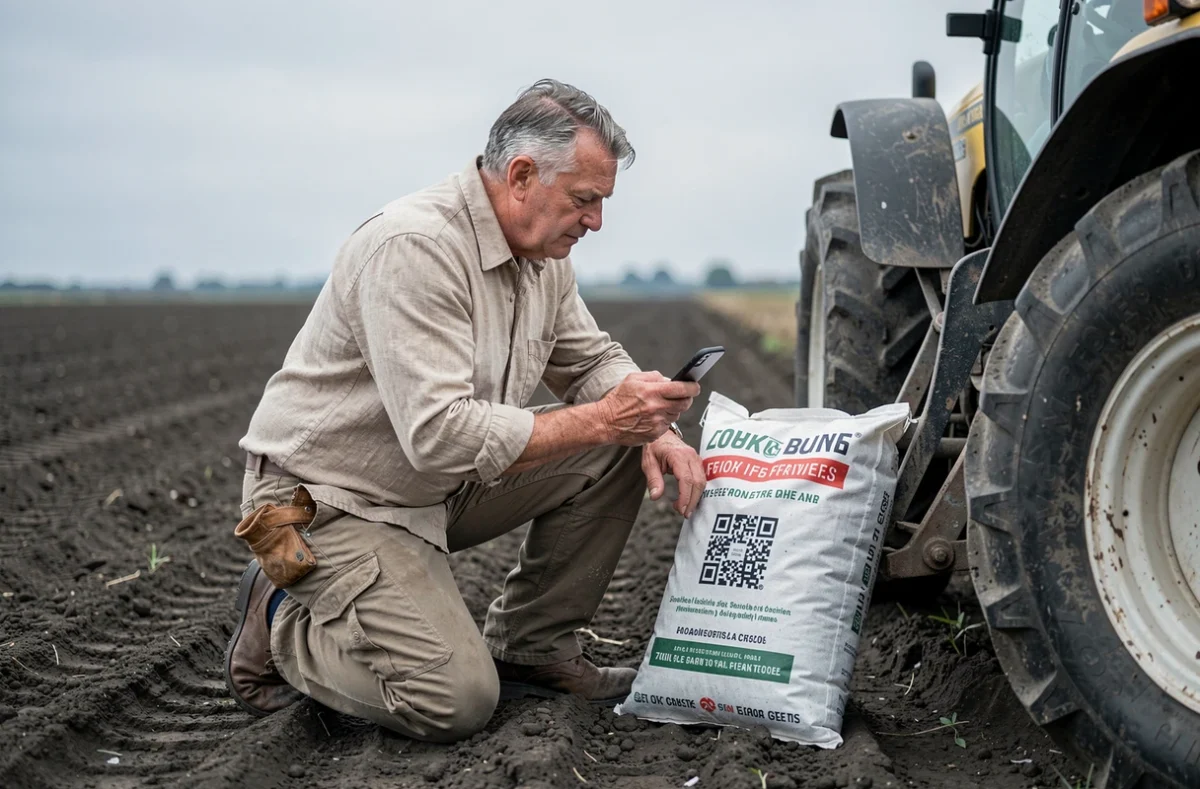
Online purchasing does not exempt one from obligations related to traceability and regulation of inputs. Plant protection products, for example, remain subject to certification requirements for the distributor and training for the buyer (Certiphyto). A site offering these products without verifying your authorization poses a compliance issue for which you are also responsible.
Price transparency and general terms of sale
Recent developments in price transparency in agricultural distribution strengthen sellers’ obligations regarding the clarity of general terms and conditions (GTC) and invoicing. Before confirming an order, check that the general terms of sale are accessible, that delivery charges are displayed before payment, and that withdrawal periods (when applicable) are clearly indicated.
- Check that the online distributor displays its approval number for regulated products (plant protection products, certain seeds)
- Always keep a local copy of the GTC at the time of ordering, as they may be modified later on the site
- Request a detailed invoice mentioning the exact references of the products, not just generic commercial designations
The convenience of online purchasing should not overshadow the fact that regulatory responsibility remains with the operator, regardless of the supply channel. A digital purchase order has the same legal value as a signed paper order at a cooperative, with the same retention obligations.
Ultimately, optimizing online agricultural purchases comes down to applying the same requirements in the digital realm as in physical commerce: verifying the seller’s identity, securing payments, retaining documents, and maintaining direct access to the supplier outside the platform. The channel changes, but the precautions remain the same.