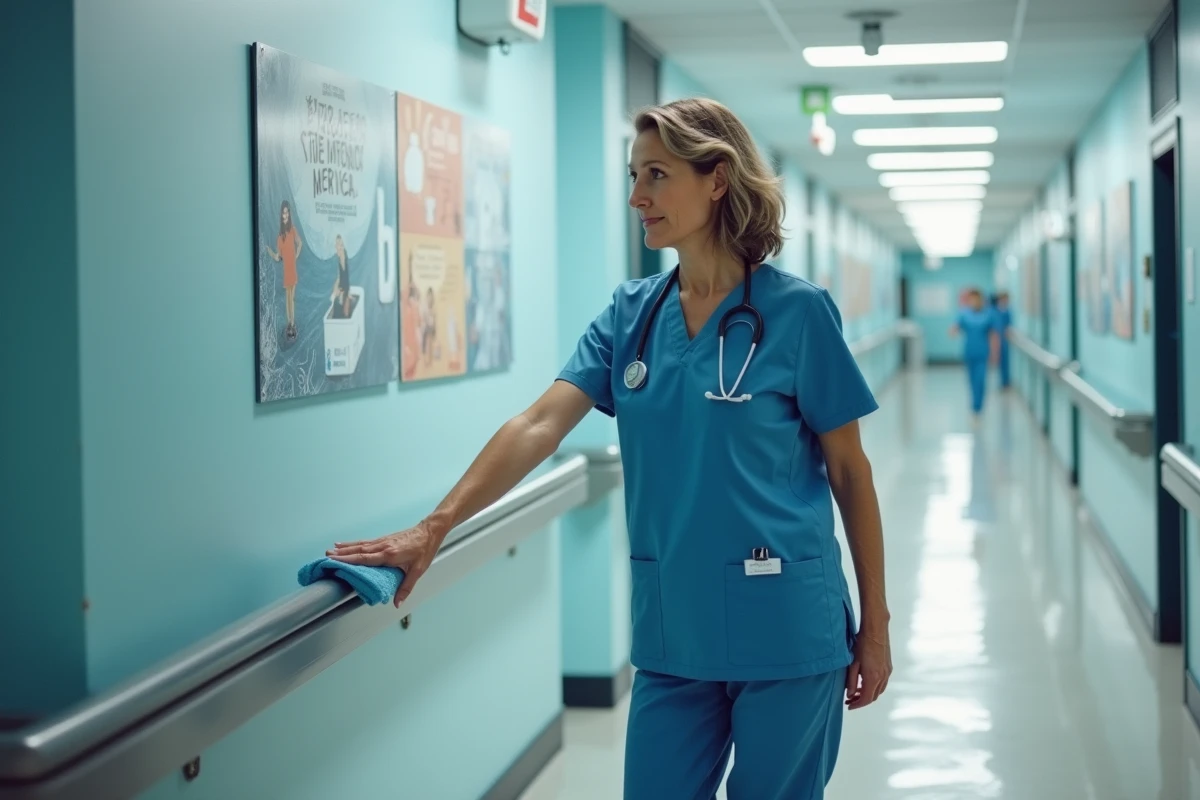
No diploma required, but sometimes ruthless selection: the job of hospital service agent (ASH) opens up without official barriers, while imposing, depending on the institutions, competitions, tests, or interviews that filter candidates. Each hospital, each clinic, each nursing home applies its own rules, and access to this position fluctuates according to internal policies, far from any uniformity.
The titles ASH and ASHQ may seem similar, but their reality on the ground varies. Missions, responsibilities, and evolution all depend on the signed contract and the hiring region. This ambiguity fuels the lack of understanding surrounding these essential jobs for public health, invisible yet omnipresent in the daily hospital routine.
ASH and ASHQ: who are they and why is their role indispensable in the hospital?
Health relies on the work of entire teams, not just caregivers. In every department, hospital service agents (ASH) and qualified agents (ASHQ) consistently work to ensure that care environments remain clean, safe, and livable. Forget the spotlight: here, efficiency is measured in discretion and rigor. Without their vigilance, infection prevention would decline, and the comfort of patients, as well as that of staff, would be compromised.
The daily life of a hospital service agent involves meticulous disinfection, linen renewal, and the cleanliness of rooms and common areas. This job, which requires close interaction with patients, acts on the front lines against the risks of nosocomial infections and contributes to the sense of security that every patient needs. Their presence, often silent, is nonetheless felt in the exchanged glance or the discreet gesture that reassures, humanizing every floor of the hospital.
ASH or ASHQ? It all comes down to training and responsibilities. The qualified agent, holding a certificate, may be entrusted with more technical tasks, such as managing specialized equipment or coordinating between teams. For those who want to delve deeper into the definition and training of ASHQ, a detailed resource exists on the subject.
In nursing homes, long-term care units, or hospitals, these agents ensure the continuity of service. Their work goes far beyond cleaning: they contribute to the quality of life of patients and all those who work within these walls. It is impossible to underestimate their impact on the organization and climate of healthcare structures.
What daily missions and skills are required to perform this job?
The rhythm of a hospital service agent consists of a succession of precise, repeated, and essential actions. These professionals guarantee the impeccable hygiene of rooms, corridors, and treatment rooms. But behind this technical aspect, they also intervene in the daily support of patients, sometimes in close collaboration with care teams. Preparing a room, managing linen, disinfecting a bed, sorting waste, checking hygiene devices: their mission encompasses a thousand tasks, all essential for the smooth running of the care process.
Some institutions also expect these agents to participate in welcoming, supporting nursing assistants, and even monitoring risky situations. The human element occupies a central place in their job. They are expected to exercise discretion, patience, and the ability to notice the slightest anomaly and report it promptly. To succeed, several qualities are sought:
- Sharp sense of observation
- Strict adherence to hygiene protocols
- Ability to work in a multidisciplinary team
In medico-social structures, the variety of populations and needs requires constant adaptability. A service agent learns continuously, adjusts their actions to each new patient, and refines their expertise over time. Quietly and without fanfare, they remain the cog that, every day, ensures the safety and dignity of those in their care.

Training, working conditions, and prospects: what you need to know before starting
The job of hospital service agent is open to all: no mandatory diploma, no prior experience required. However, in practice, employers often prefer candidates who have already worked in cleaning or hygiene, or who hold a vocational baccalaureate in “support, care, and services to individuals” or the professional title of cleanliness and hygiene agent. The validation of prior learning (VAE) allows, over time, to climb the ranks, obtain the ASHQ qualification, or pursue training as a nursing assistant in IFAS.
Job opportunities cover the public sector, the medico-social field, and the private sector. Most contracts offered are fixed-term or permanent, with entry-level salaries at minimum wage. Salary evolution is linked to seniority, bonuses, and the salary scale of the hospital function. The reality of the job involves irregular hours, lifting heavy loads, prolonged standing, and exposure to cleaning products: the demanding nature is part of the daily routine.
To progress, VAE and continuing education open the door to other professions, particularly that of nursing assistant. Employers recognize acquired experience, sometimes encourage internal mobility, and support engagement in additional training. As for prospects, they expand with the aging population and the diversification of needs in the medico-social sector. Here are the main points to remember about access and progression in this profession:
- Access without a diploma
- Diverse contracts (fixed-term / permanent)
- Salary at minimum wage, with potential for growth
- Possible advancement through VAE or continuing education
The job of hospital service agent, too often forgotten by the general public, stands as a key component in the structure of our healthcare system. On every floor, with every room change, their commitment is reflected in the spotless surfaces and the serenity of patients. Tomorrow, when the question of collective health arises again, it will be hard to ignore those who, in the shadows, steer the ship with discretion and consistency.