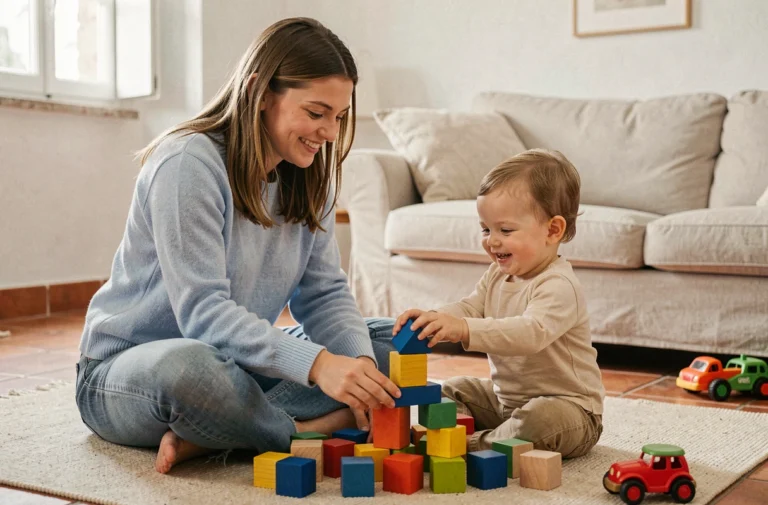
Perceiving the devastating trend of cherubs proves essential in order to preserve the integrity of your sofa. Education and discipline, key preventive elements, play a leading role in instilling respect for material possessions. Choosing robust materials constitutes an invisible yet effective barrier against potential damage. Specific protective equipment, true shields, limit the damage caused. Ultimately, instilling responsibility, this noble task of teaching furniture appreciation, ensures the longevity of your couch. This ultimate guide aims to be a valuable ally for regained peace of mind.
Understanding the Destructive Propensity of Toddlers: A Crucial Step
There is no doubt that little ones have a unique way of exploring the world. Their unwavering curiosity, coupled with a complete lack of understanding of potential dangers, can easily turn into a recipe for disaster. Parents and caregivers are often astonished by their offspring’s ability to create chaos in just a few unsupervised seconds.
A cherished moment on the sofa can quickly escalate when the child suddenly decides it’s the perfect time to test their new fine motor skills. This underscores the importance for parents to use a sofa protector. Not only will this safeguard your precious investment against unexpected accidents involving juices or snacks, but it will also serve as a barrier between curious fingers and the irresistible temptation to discover what lies beneath those attractive covers.
The major advantage is that when an accident occurs • as is almost always the case with these little walking tornadoes • you simply need to remove the sofa protector rather than frantically trying to eliminate an unsightly stain before it permanently soaks into your favorite furniture.
Next comes their overflowing imagination, which transforms everyday objects into potentially destructive toys.
The Importance of Education and Discipline: A Preventive Role
The combination of education and discipline, far from being a hindrance to freedom, is actually a preventive barrier aimed at building a responsible and accomplished citizen. These two inseparable pillars form the very foundation of modern societies. Discipline instills a sense of individual responsibility while education enriches minds, shapes characters, and helps discern right from wrong.
The first step is to clearly understand what these two terms mean: education, which is supposed to be holistic, encompasses not only the transmission of academic knowledge but also essential moral values such as mutual respect, empathy for others, and personal integrity. On the other hand, with its often severe or restrictive connotation in our collective imagination, discipline can be defined as a rigorous adherence to a set of rules or principles established by a legitimate authority.
Establishing this harmonious association between education and discipline from a young age greatly contributes to personal development as well as that of one’s immediate social environment. A disciplined child will tend to adopt positive behaviors such as better time management, increased self-discipline without constant supervision, and above all, wise decision-making based on their previous educational experiences.
The Wise Choice of Robust Materials: An Invisible Solution
When it comes to construction or renovation, the careful selection of materials is a subtle yet essential trick. Choosing resilient materials will not only guarantee increased durability but also a better long-term return on investment. Whether you choose sturdy wood for frameworks, stainless steel for appliances, or high-strength concrete for foundations, every decision counts.
It is essential to carefully examine the cost-benefit ratio before making your final choice. Often, cheaper materials may seem attractive at first due to their lower initial cost. However, they may end up costing more in the long run if their low durability requires frequent replacements or leads to other structural issues.
Take, for example, the case of a home’s exterior cladding: choosing a material like vinyl might seem economical and easily accessible. But consider its lifespan compared to that of stucco, which is certified durable against natural weather elements like rain and wind and hardly deteriorates over time. The initial investment may be higher, but the peace of mind provided by its longevity makes it a cost-effective solution over an extended period.
Specific Protective Tools: A Shield Against Damage
In the world of gaming, where every detail can make the difference between victory and defeat, protective tools are absolutely essential. Imagine for a moment an impenetrable armor, capable of making its wearer invincible against any enemy attack • a true damage shield. This concept may seem like something out of fantastic science fiction, but in the realm of video games, it is indeed a tangible reality.
Implementing a damage shield is essential to increase your chances of survival during the epic battles you face throughout your adventure. Without this crucial protection, it would be nearly impossible to overcome the increasingly formidable challenges that stand in your way. This impenetrable barrier offers the player a considerable advantage by allowing them to absorb multiple hits without suffering any damage.
To optimize their use, these protective tools must be employed strategically according to the type of enemy encountered and the specifics of the surrounding terrain. It’s not just about blocking all enemy attacks but knowing when to activate this valuable ally to maximize its protective effect and minimize energy consumption.
The introduction of the damage shield concept has literally revolutionized traditional gameplay by adding a new strategic dimension that is both exciting and complex.
Cultivating Responsibility: The Art of Teaching Furniture Respect
It is undeniable that the act of teaching furniture respect is crucial in cultivating responsibility among the young, as well as adults. Pieces of furniture often represent considerable investments, and their preservation reflects not only a mature perception of material value but also a sense of responsibility.
The educational process: It is a common mistake to assume that furniture respect is learned solely at home. On the contrary, it should be a comprehensive learning experience that extends to schools and other public environments. It is therefore the responsibility of both parents and teachers to instill this notion from a young age to avoid its neglect in adulthood.
The central idea: The main point lies in the understanding that taking care of furniture is not a luxury but a necessity. When we learn to value these material possessions, we simultaneously cultivate our ability to respect what does not necessarily belong to us directly.
Positive repercussions: Teaching furniture respect has several positive impacts on our daily behaviors. Not only does properly maintaining our furniture extend its lifespan, leading to significant long-term savings; but it also influences our attitude towards the outside world • fostering a more responsible and respectful society.